
Paint is one of the oldest human technologies and one of the most overlooked sources of pollution. From the solvents that evaporate as a coating dries to the microplastic flakes that peel off years later, the way we colour and protect our world has an environmental cost that rarely shows up on the label.
The old formula
For most of the twentieth century, performance came first. Petroleum-based resins, volatile organic compounds and synthetic pigments delivered durability and brightness, and their side effects were largely ignored. Reflective and luminescent paints followed the same path: glass beads, plastic binders and heavy-metal phosphors that glow beautifully but never quite go away.
An eco-friendly revolution
Over the last decade the industry has begun to change. Water-based paints have replaced many solvent-heavy formulas, plant-derived binders are entering the mainstream and regulators in Canada and abroad are tightening limits on toxic ingredients. Consumers are asking a new question of every product they buy: what happens to this when I am done with it?
EcoLite was born from that question.
Rethinking safety paint from the ground up
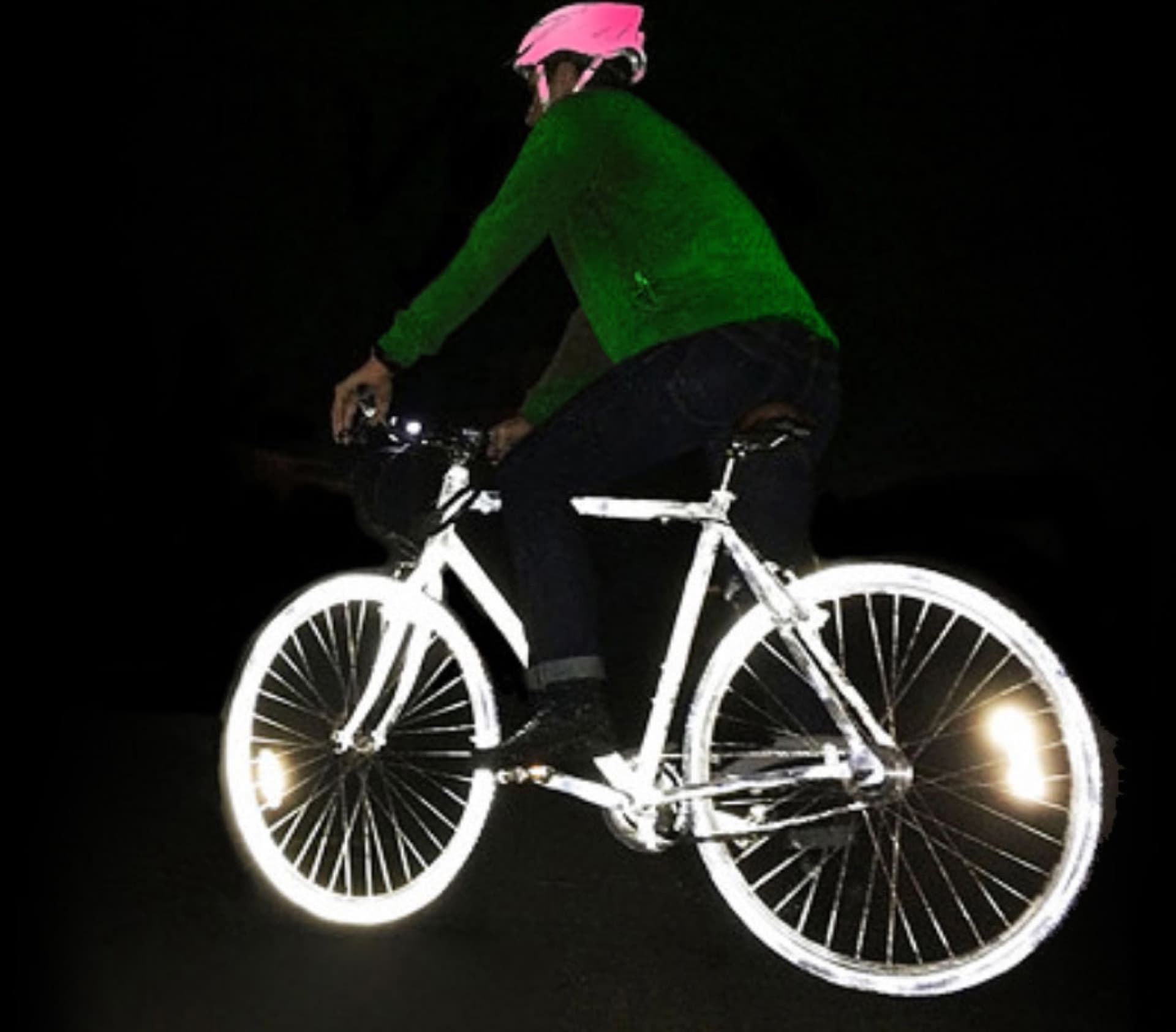
Our spray does two jobs at once. It reflects headlights straight back to their source and it glows on its own after dark. Achieving that with biodegradable materials required rethinking every ingredient.
- Retroreflection comes from polylactic acid beads made from sugarcane by-products, a renewable resource that would otherwise be waste.
- Luminescence comes from organic long-persistent luminescence (OLPL) compounds, an emerging class of carbon-based materials that store and release light without rare-earth or heavy-metal additives.
- Adhesion comes from kitchen-grade gelatin, a natural glue that holds firm through a ride or a run and rinses away with water.
Painting with a lighter touch
The philosophy behind EcoLite is that a coating should be judged by its whole life cycle, not just by how it looks on day one. A safety paint that keeps a cyclist visible tonight and returns to the soil next season is a better product than one that lasts forever in a landfill or a lake.
Preserving the planet does not require giving up performance. It requires designing for the end from the beginning. That is what modern paint should look like, and it is the standard we hold ourselves to with every can of EcoLite.