Journal
The Peril of Microplastics: Threats to Fish and EcoLite's Sustainable Solution
EcoLite Team

Every year, an enormous volume of plastic finds its way into Canada's rivers, lakes and coastal waters. Much of it never arrives as a bottle or a bag. It arrives as dust: microplastics smaller than a grain of rice, shed from tires, textiles, packaging and, surprisingly often, from conventional paints and reflective coatings.
What microplastics do to fish
Fish cannot tell a plastic fragment from a morsel of food. Once swallowed, microplastics can block digestion, damage tissue and carry toxic chemicals that accumulate up the food chain. Studies of freshwater species across North America have found plastic particles in the guts of a large share of sampled fish, and those particles do not stop with the fish. They travel to the birds and mammals that eat them, and eventually to our own tables.
The hidden problem with reflective paint
Most retroreflective coatings rely on glass or plastic microspheres bonded with synthetic resins. They work well on a road sign, but on clothing, gear and outdoor surfaces they wear off over time. Each wash cycle and each rain shower sends a little more of that material down the drain. Conventional glow-in-the-dark paints add heavy-metal-based phosphors to the mix. Neither was ever meant to biodegrade.
EcoLite's sustainable approach
EcoLite started with a simple question: what if the paint that keeps you safe at night could vanish harmlessly when its job is done? Our answer is built from three organic ingredients.
- Sugarcane PLA beads. The retroreflective microbeads are made from polylactic acid derived from sugarcane by-products, a plant-based polymer that breaks down in composting conditions instead of persisting for centuries.
- Organic long-persistent luminescence (OLPL). Our glow comes from organic materials rather than metal-based phosphors, so there is no toxic residue as it degrades.
- A biodegradable adhesive. Kitchen-grade gelatin binds everything together and washes away cleanly with water.
A small can, a big difference
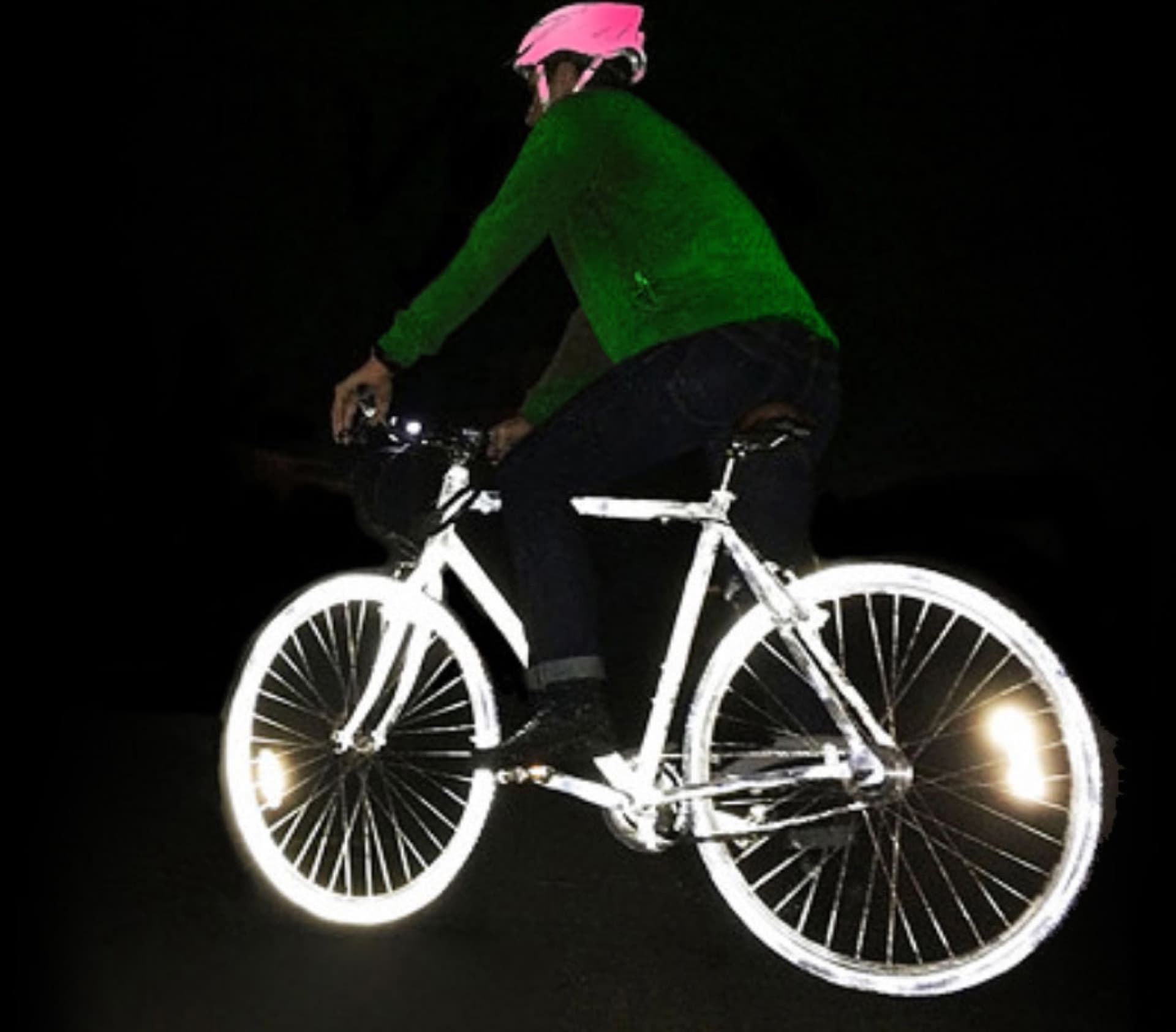
No single product will solve the microplastics crisis. But every reflective stripe, safety marker and glowing bike frame that biodegrades instead of shedding plastic is one less source of harm for the fish in our lakes and streams. EcoLite is proof that being seen at night and protecting aquatic life do not have to be at odds.